
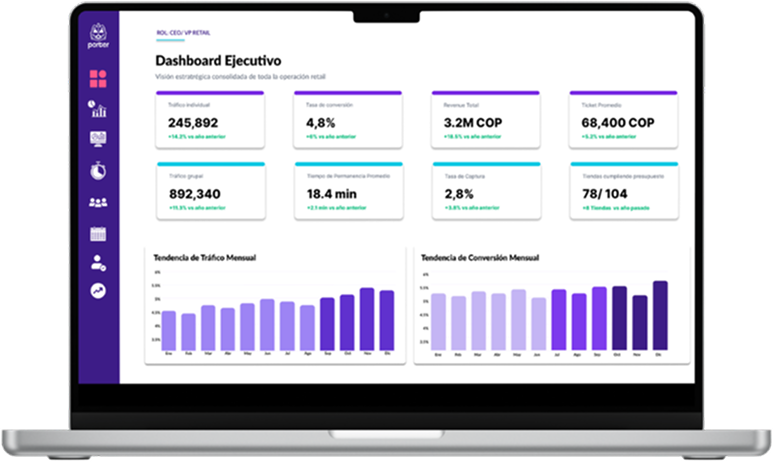
What does Porter measure?
A people counting system generates far more data than just entries and exits. These are the indicators that Porter measures and what you can do with each one.
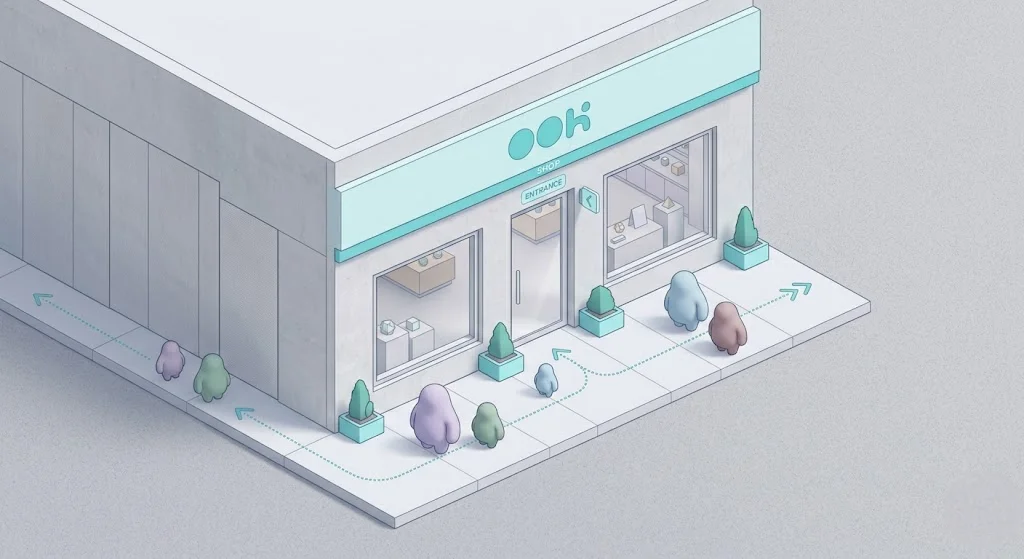
Outdoor proximity traffic
Measures the flow of people passing in front of your store without entering. It's your business's opportunity universe: the more people who pass, the greater your capture potential.
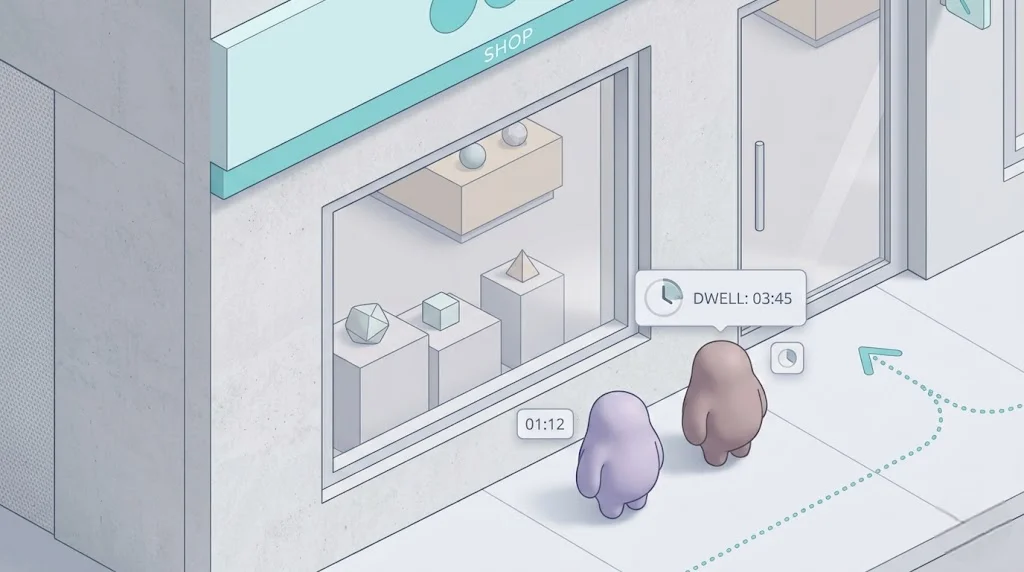
Outdoor window dwell time
Records how long a person stops in front of your window before entering or walking past. If there's heavy outdoor traffic but little stopping, your window isn't doing its job.
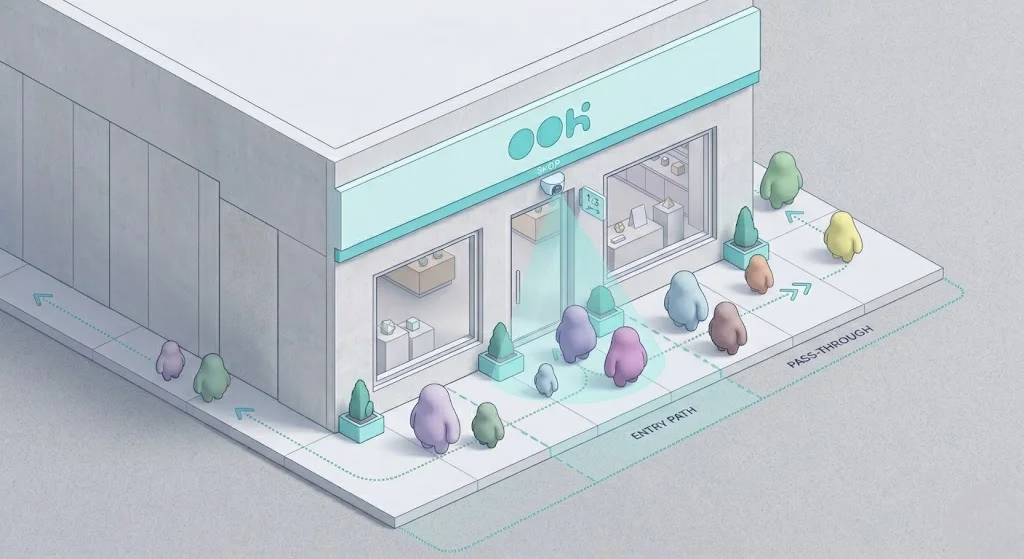
Outdoor to indoor capture rate
The relationship between outdoor traffic and people who actually enter. Measures how effective your entrance, signage, and window are at converting passersby into visitors.
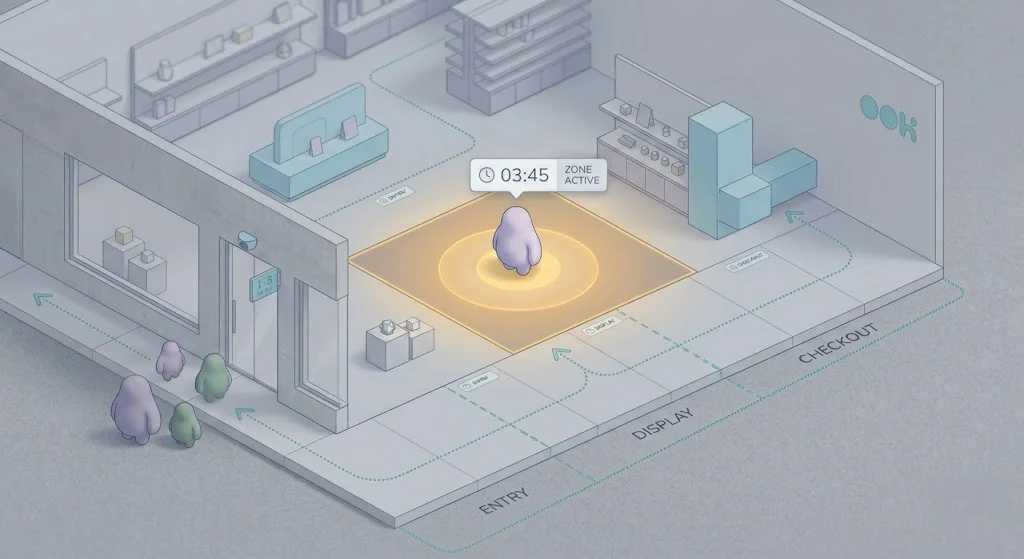
Indoor dwell time by zone
Measures how long a person spends in specific zones inside your store. High dwell time indicates interest; very low can signal the product isn't attracting or the space is poorly organized.
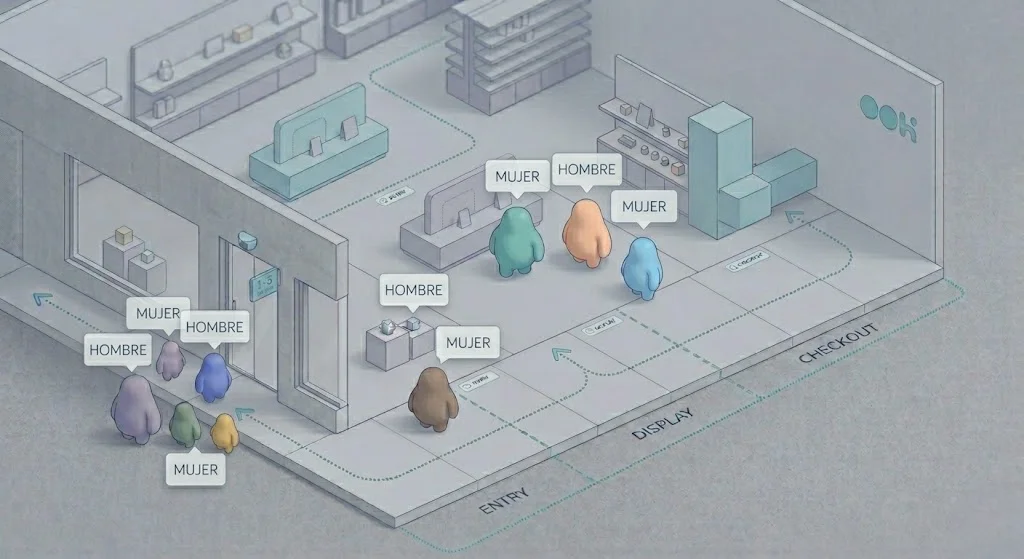
Demographic analysis (outdoor & indoor)
Anonymously estimates the age range and gender of visitors. Helps you understand if your incoming traffic matches your target audience and which profiles predominate at different times.
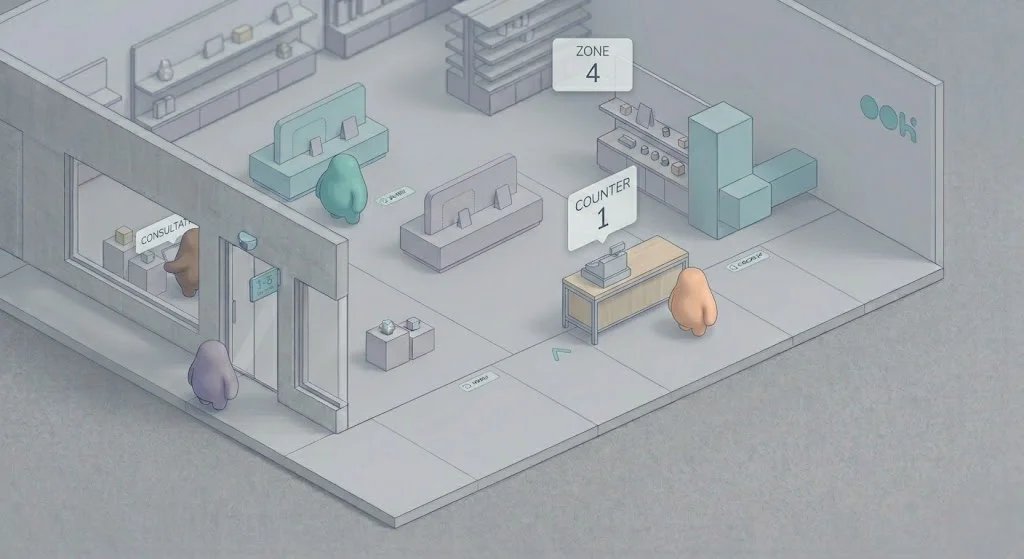
Indoor occupancy
Number of people inside your space in real time. Helps you manage capacity, staff peak hours, and identify bottlenecks in the customer experience.
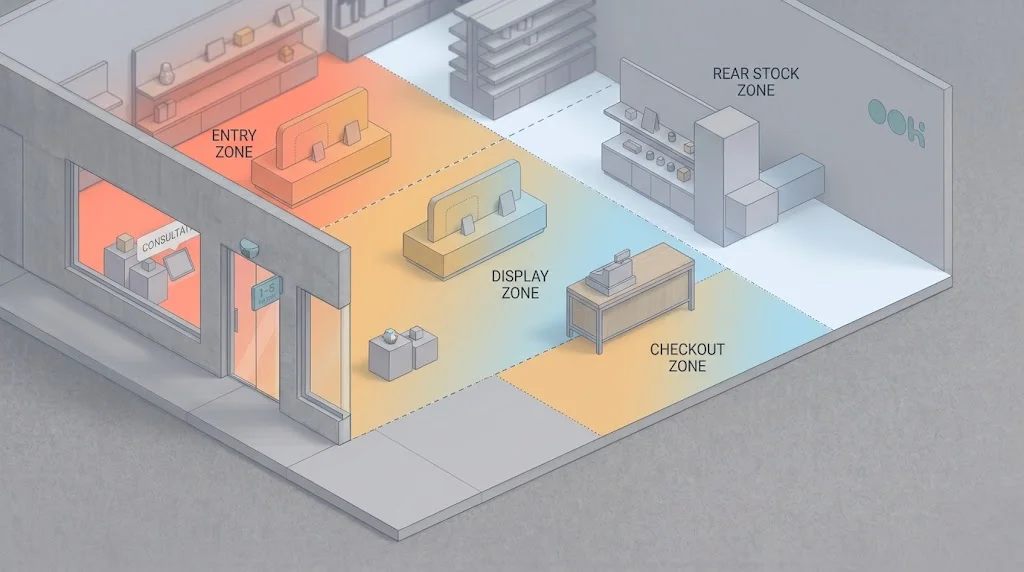
Indoor heat maps
Visual representation of high and low traffic zones inside your store. Guides decisions on product placement, signage, and store layout redesign.
Who uses this data?
Marketing
To measure if a campaign drove more traffic and whether your window display is working.
Operations
To schedule shifts based on real occupancy levels.
Expansion
To evaluate new locations based on proximity traffic data.
Visual merchandising
To redistribute products based on heat maps and dwell time data.
Ready to measure your store?
Book a demo and we'll show you how it works in your retail operation
Book your demo